
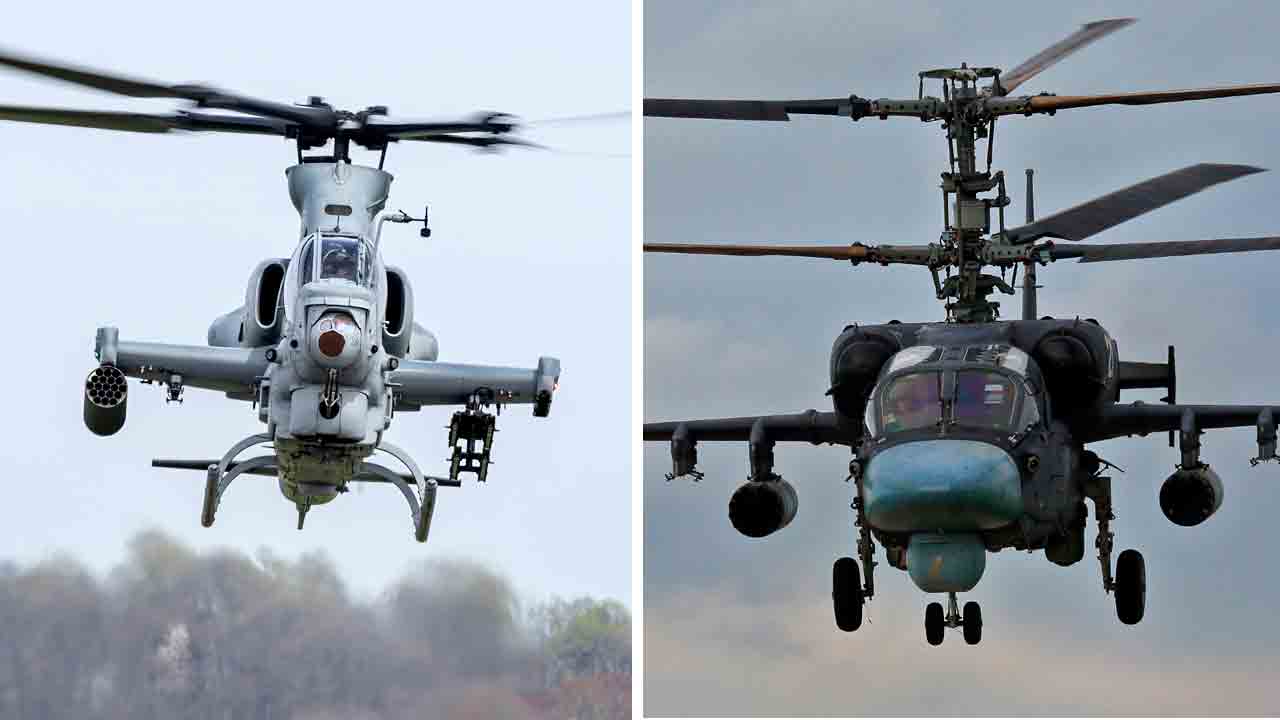
The AH-1Z Viper (USA) and the Ka-52 Alligator (Russia) are two of the most advanced attack helicopters in the world. Both were designed for attack missions, armed reconnaissance, and aerial support, but they follow very different design philosophies.
+ IDEX 2025: Russian Company Unveils Ka-32A11M Firefighting Helicopter
General Comparison
| Feature | AH-1Z Viper | Ka-52 Alligator |
|---|---|---|
| Manufacturer | Bell Helicopter | Kamov |
| Year of Introduction | 2010 | 2011 |
| Max Speed | 411 km/h | 315 km/h |
| Range | 685 km | 1,100 km (with extra fuel tanks) |
| Engines | 2x GE T700-GE-401C (1,800 shp each) | 2x Klimov VK-2500 (2,400 shp each) |
Firepower
- AH-1Z Viper: M197 20mm cannon, Hellfire missiles, Hydra 70 rockets, and AIM-9 Sidewinder.
- Ka-52 Alligator: 2A42 30mm cannon, Vikhr-1 missiles, S-8 and S-13 rockets, R-73 missiles.
Winner: Ka-52 Alligator – greater firepower and a wider variety of weapons.
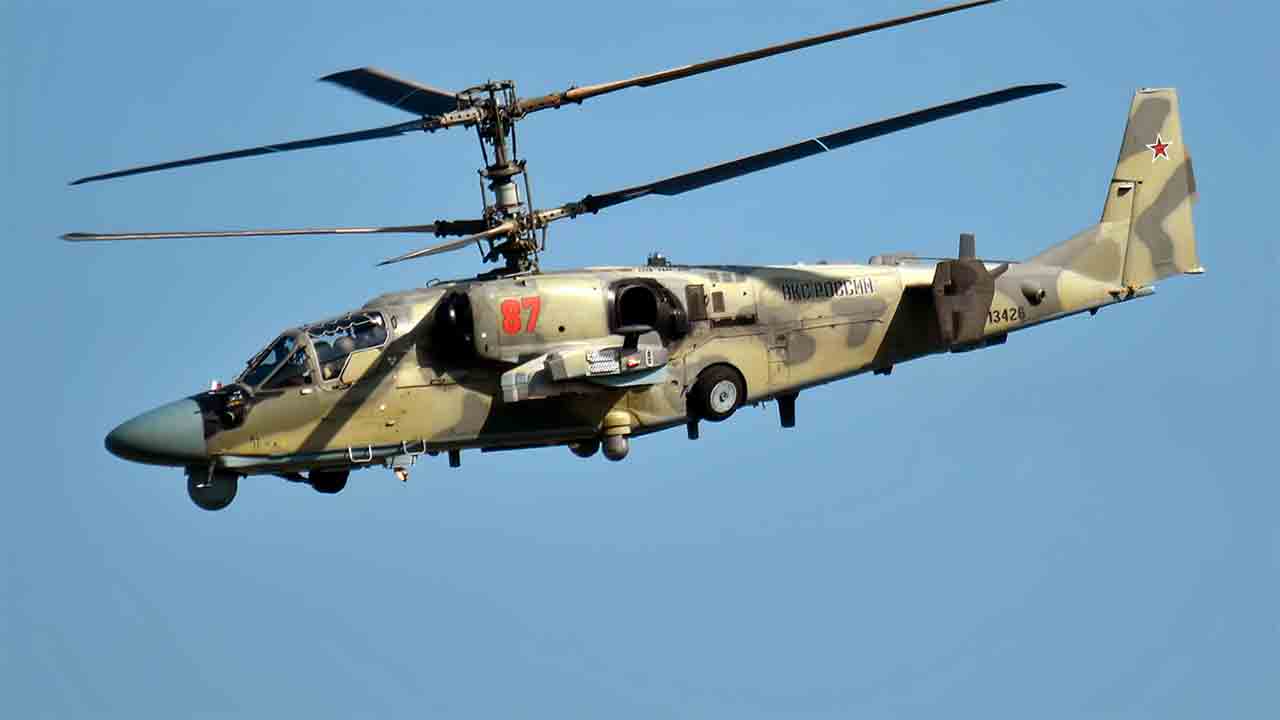
Speed and Maneuverability
- AH-1Z Viper: Faster and more agile.
- Ka-52 Alligator: Greater stability and better hovering capability.
Winner: AH-1Z Viper – higher speed and mobility.
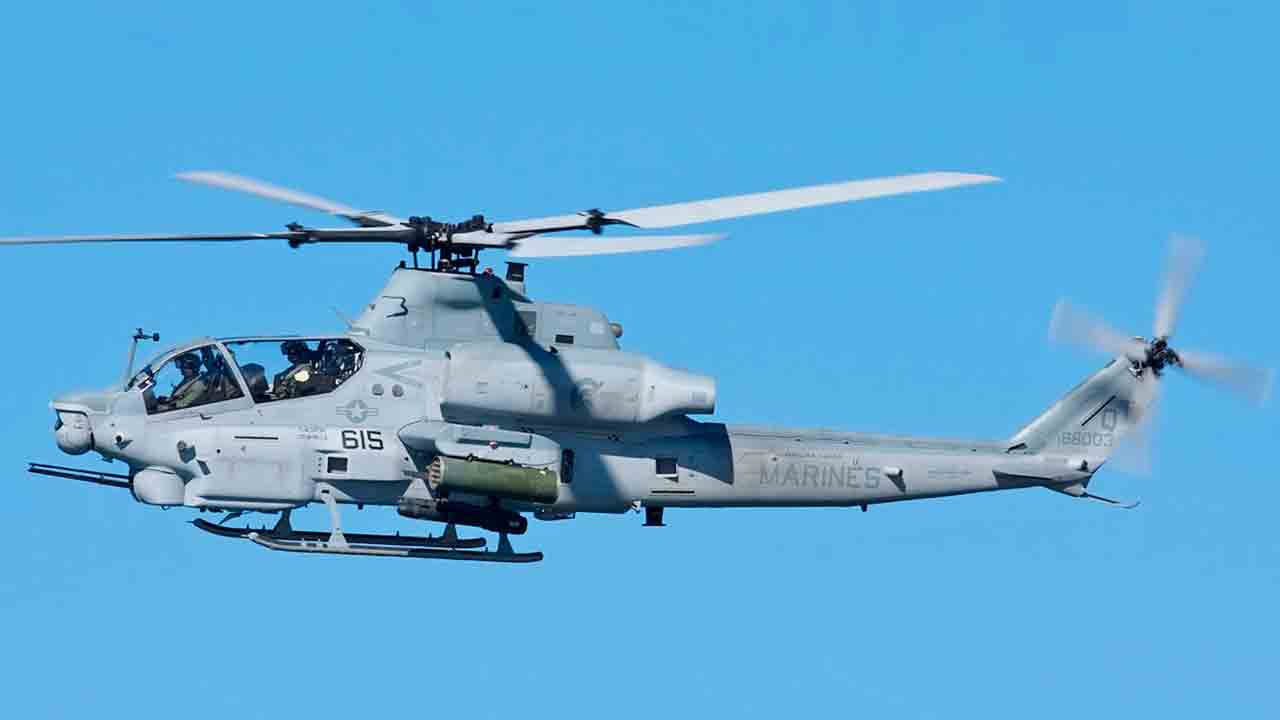
Protection and Survivability
- AH-1Z Viper: Moderate armor and advanced electronic systems.
- Ka-52 Alligator: Cockpit armored against 23mm rounds and ejection seats.
Winner: Ka-52 Alligator – better armor and ejection system.
Final Verdict
| Category | Winner |
|---|---|
| Firepower | Ka-52 Alligator |
| Speed | AH-1Z Viper |
| Protection | Ka-52 Alligator |
| Technology | Ka-52 Alligator |
| Maneuverability | AH-1Z Viper |
If you want an ultra-agile, fast, and efficient helicopter, choose the AH-1Z Viper. If you want superior firepower, strong armor, and advanced sensors, the Ka-52 Alligator is unbeatable.
Beyond advanced technology and firepower, the experience and expertise of pilots play a fundamental role in the effectiveness of the AH-1Z Viper and the Ka-52 Alligator on the battlefield.
Pilots trained under Western doctrine, such as the U.S. Marine Corps operators of the AH-1Z Viper, emphasize coordinated attacks, surgical precision, and integration with ground forces, maximizing the helicopter’s combat efficiency.
Meanwhile, Russian pilots of the Ka-52 Alligator, trained for high-intensity offensive missions, adopt paired attack tactics, utilizing long-range radars and infrared sensors for strategic ambushes and advanced reconnaissance.
The operational strategy of each military force directly influences how these aircraft are used, making the combination of technology and pilot skills a key factor for success in combat.
Sources: Bell Textron (Manufacturer of the AH-1Z Viper) – Kamov / Russian Helicopters (Manufacturer of the Ka-52). This content was created with AI assistance and reviewed by the editorial team.
